Visualizzazione post con etichetta Recycle. Mostra tutti i post

15 mar 2013

Indonesian students create eco-friendly deodorant from cow dung


DwiNailul Izzah and Rintya Aprianti Miki are two students who won the gold medal at the Indonesian Science Project Olympiad (ISPO), which is held every year at the end of February in Jakarta, with their original invention and respectful of environment.

The two young inventors have create an affordable air freshener made from cow dung. Yes dung, as weird as it sounds, the formulation actually has a pleasant herbal smell. This two girls overcame 1,000 other competitors with their surprising freshener, which was created by collecting unused cow manure from a cattle farm in Lamongam, East Java, and fermenting it for 3 days: "Then they extracted the water from the fermented manure and mixed it with coconut water. Finally, they distilled the liquid to eliminate all impurities. The whole process took 7 days, which is pretty long, but in the end they obtained what they were looking for – a liquid air freshener with an herbal aroma from digested cow food."

Their natural deodorant is healthier, contains no chemicals that are found in similar products available on the market, and is also cheaper. While a traditional deodorant to 275 grams costs 39,000 Indonesian rupiahs (about $ 4), a 225-gram cans of deodorant from cow dung only costs 21,000 rupees (about $ 2), which is half. Explains Dwi Nailul Izzah: "Our air freshener is not supplemented with chemicals to smell fragrant, it’s pure and smells like the natural plants fed to cows."

Dwi and Rintya are ready to show their cow poop air freshener at the International Environment Project Olympiad (INEPO) held in Istanbul, Turkey during May, and are going to file for a patent.

More info

10 mar 2013

Sunday's tale: the Thai Temple of recycled beer bottles


Sunday's Tale: a post from the past
In the Thai landscape, Buddhist temples are very common sight.
Deep in Sisaket province, in the north-east of Thailand, lies one incredible temple complex. Its official name is Wat Pa Maha Chedi Kaew but it is known by almost everyone as Wat Lan Kuad or the Temple of a Million Bottles
There’s an estimated 1.5 million bottles bound in concrete into the temple. It is a novel way to recycle any empties.

The construction of this temple complex began in 1984, as the monks found themselves with an excess of donated beer bottles that they previously used just to decorate existing buildings.
The resident Buddhist monks at the complex encourage local authorities to deposit any used bottles at the temple which they then use to build new structures and works of art to the grounds of the temple. "The more bottles we get, the more buildings we make", says Abbot San Kataboonyo. Everything on the temple site, from the crematorium to the toilets, incorporates the bottles, making a space that’s both functional and beautiful. Bottle caps have been used to decorate murals, and to create mosaics of Buddha.


The monks have come to prefer the bottles over traditional red clay bricks as they don’t fade and produce a fantastic colored ambient light. They primarily use green and brown glass bottles from the beer brands Heineken and Chang. Some of the older buildings in the complex are created with rare square shaped Heineken bottles that are easily stackable and were briefly sold in the 80′s. Perhaps that is where the idea for bottles as bricks was originally conceived.

Even though drinking is a sin in Buddhism, this still seems like a positive use of beer and lager bottle. So, if you find yourself in Thailands Sisaket province consider stopping by and earning some merit. Or at least just enjoy a cold beer and donate your bottle to the effort!


7 mar 2013

NLE architects and Makoko community in Lagos: floats idea for life on the water


Today is a rainy day here in Milano and maybe for inspiration, Sustainable Diary speaks of a water story. As you know on our planet water levels are steadily rising, and along west Africa's densely populated coast many waterfront communities are finding themselves inundated with the problem of adaptive housing solutions that withstand swelling tides and swift currents.

NLÉArchitects has been working on a three-phase plan for the waterfront community of Makoko in Lagos, in Nigeria. An estimated 250,000 people live here, they trade, shop and build aquafarms on the lagoon's waters. This slum was said to be created in the 18th century as a fishing village, but has ballooned as others have sought to find a home.
Each year, the tropical rains that lash Lagos, overwhelm the colonial-era drainage system. The NLÉ's project will transform the already buoyant city into a contemporary community on the water's surface with independent floating structures made of local materials applied in new ways.

First step of the project is the realization of the Makoko Floating School, a triangular form in section constructed with timber on a platform supported by empty blue plastic drums. The 3-storey structure contains a common area for children to play on as its base, with two floors for classrooms above it. The energy supply is based on renewable technology, this with the water catchment systems make the dynamic educational facility partially self sustainable.

The school is expected to serve the urgent needs of educating children in the community, and also as a floating building pilot project for African water communities.
"Particularly in view of climate change, there's a need to adapt buildings. We decided to use this as a prototype for developing something whether the water level rises or goes down, the building responds to that," said architect Kunle Adeyemi from NLÉ.
The school was completed in the end of February, the floating houses being finished in September of this year and the Lagos Water Community project by the end of 2014 which will herald a new era for coastal developments in Africa.

More info

Photo credit © NLÉ Architects


27 feb 2013

A poetic concept: making bikes from junked cars

The Spanish design studio Lola Madrid, owned by creative agency Lowe & Partners, has launched few days ago the platform LOLA Hace (LOLA Make), in order to design and manufacture products that make life easier for people or emotionally in touch with them. The first product that they have conceived is Bicycled.
Bicycled is new making bikes project that utilizes recycled cars as the main source for material. It is such a poetic concept, fewer cars and more bikes is a probably a dream for cyclists everywhere, in an effort to create the most efficient, ecological and healthy means of transportation.

Even though the line is not yet complete, Lola Madrid has just launched a video about the process of transformation and creation of models: the exclusive use of car wrecks different gives a unique look to any bike, which makes anyone proud owns one! Each hand-made bike is based on a consumer insight - which reflects on the emotional attachment from wrecked vehicles. Body metal is used for the bike frame, brake lights turn into reflectors, door handles become seat post clamps and so on.


Bicycled looks like a great way to give cars a second life, while also reducing the demand for new material for bikes. Add in that each creation is closer to art than a mass produced product and they seem to have a winning combination.

More info
website Bicycled
website Lola Madrid

Photo credit © Lola Madrid


23 feb 2013

Create without destroying: Carmina Campus, a fashion sustainable initiative


These are the days of the Milan Fashion Week, one of the things that has attracted the attention of Sustainable diary is Carmina Campus, a collection of handbags, jewels and furniture successfully combining the idea of ethical fashion and sustainable eco-friendly, with the great traditional Italian craftsmanship.
The brand was founded in 2006 by Ilaria Venturini Fendi, who explains "With Carmina Campus I tried to fashion a new approach, enriching the body of knowledge derived from my family history with values such as respect for the environment and the implementation of work projects aimed at social development"

The creations included in the collections are under the sign of reuse and upcycle, as Carbags line, bags made with seat covers, sun screens, safety belts recovered from car in shambles. Over the years the collection Carmina Campus made in Italy has been enriched by new materials. So switches are turned into sparkling Switch Bag and bottle caps become closures for Pyramid Bag, bags reversible with an inlay made of small pieces of leather processed in a pyramid. And then there are the old color charts, which take the form of soft Soft Bag.


While the items of the collection 100% made in Africa, successfully making concrete the philosophy “not charity, just work”. In Kenia Carmina Campus has given rise to the Ethical Fashion Initiative. The project has seen the involvement of some employees of craftsmen who have passed on their know-how to local communities through a process of training on site. So the brand has launched social projects that have the objective of training microentrepreneurs, promoting education and health care. The iniative was born from the collaboration of Carmina Campus with ITC (International Trade Centre), an agency of the UN and the World Trade Organization, whose mission is to provide developing countries opportunities for training and work.

More info

Photo credit © Carmina Campus


21 feb 2013

Urban agriculture on ship in Antwerp, by art collective Time Circus


In this day of snow in Milan, is back again to talk about urban garden, this time the project enters (or leaving?) directly from the art world.
We know that urban gardens can bloom in the weirdest of places, also on an old unused ship crane docked at Bonapartedok, the Belgian port city of Antwerp. Here the Belgian art collective Time Circus, built their great green space, and outfitted with a tree-house made out of recycled materials and a chicken coop. Another cute feature from the floating garden is a glazed greenhouse.


Commissioned by the Antwerp’s MAS Museum, the floating Welvaert Welton garden is designed to engage locals and visitors with sustainable urban farming practices, through community workshops on composting and homemade cider parties. Not only is there a vegetable garden, there's also a kitchen where food can be prepared using ingredients straight from the garden. Urban agriculture is not just about producing one’s own vegetables but more about creating an urban living, working and meeting place.

This experimental garden project is temporary, intended to go on until 2014. It is one cool example of taking back abandoned city spaces, and they can become green and productive.
Time Circus said that is ready to travel to far off places to spread the idea...

More info

Photo credit © Time Circus


17 feb 2013

Sunday's Tale - Nature integration into urban culture: Flower cushion in Bucheon City, Korea


Sunday's Tale: a post from the past
"Flower cushion" was presented in October 2012 after 2 months of work, for "Artistic Factory", a public art project by Kyonggi Art Foundation. It was initially planned as two separate commissions, one by seoul-based interdisciplinary artist Jeong Hwa Choi and the other by Korean architecture Mass Studies but, following the site visit, both decided to collaborate on single project to have a stronger impact with relatively small means.

"Flower Cushion" is located at the Piloti space at block 1 of Technopark, in Bucheon City, Korea. The existing Piloti space with an high ceiling was not well used despite of its generous size and prominent location in this highrise factory block. Therefore, they propose a gathering space that accommodates factory workers' various activities such as resting, meeting and outdoor performances, etc. At the same time, it works as a pedestal for the Choi's sculpture "You are Flower" that was created from recycled monochromatic hardware part, continuing a series of floral-form works that use the artifacts of everyday life and Korean kitsch to honor the intangible beauty of nature while understanding it's variously successful integration into urban culture.


"Flower Cushion" rises above ground, as if the blossoming of Choi's flower created the eruption. This small hill like eruption follows the existing pavement's checkerboard pattern and colors which are made of typical interlocking cement paving blocks. These "cushions" rise around the flower sculpture in an elliptical concentric form that covers around 10m X 7m in plan and 1.2m in height. The height of each "Flower Cushion" provides optimum seating conditions with various height and viewing directions. While maintaining the same colors and shape as existing cement blocks, the material for "Flower Cushion" is made of rubber chips in order to accommodate a comfortable seating condition, also they calling attention to the over-saturation of consumable and ultimately disposable objects in the digital age.

More info:

Photo credit Kyungsub Shin, draws from Mass Studies


16 feb 2013

Upcycled Playground in Malawi's hospital by Sakaramenta


Sakaramenta is a social enterprise producing push and bicycle carts.
It is based in Blantyre, Malawi, and founded in 2009. Sakaramenta produces 5 different carts to transport patients, goods and other supplies behind the bicycle. The bicycle cars are designed according to high Dutch quality standards, at the moment 21 people are employed.

The reason to start up this business, is a believe in creating employment, stimulating entrepreneurship and local production in the best of way of bringing development to a country.
Getting things from A to B is not always easy in Malawi. The weather, shortage of fuel and quality of roads make carrying goods and people a though job. Sakaramenta takes the challenge to solve these problems.
Furthermore they make play ground, school and hospital equipment. Like glides, swings, school desks, trolleys. The focus point are: simple, strong and sustainable. All the parts can be maintained locally. Them workshop is in Blantyre, experienced and well educated staff are making high quality products.


The last project is born from an idea by Peter Meijer, founder and managing director of Sakaramenta. He has created a kids' playground on the site of a local hospital.
The simply wonderful intervention considers its site, introducing a scrapped ambulance, repurposing it as a playground clubhouse, with an integrated - where children patients (and grown-ups) can play having a fun together. Independent research concludes that playgrounds are among the most important environments for children outside the home. Most forms of play are essential for healthy development, but free, spontaneous play—the kind that occurs on playgrounds—is the most beneficial type of play.

More info
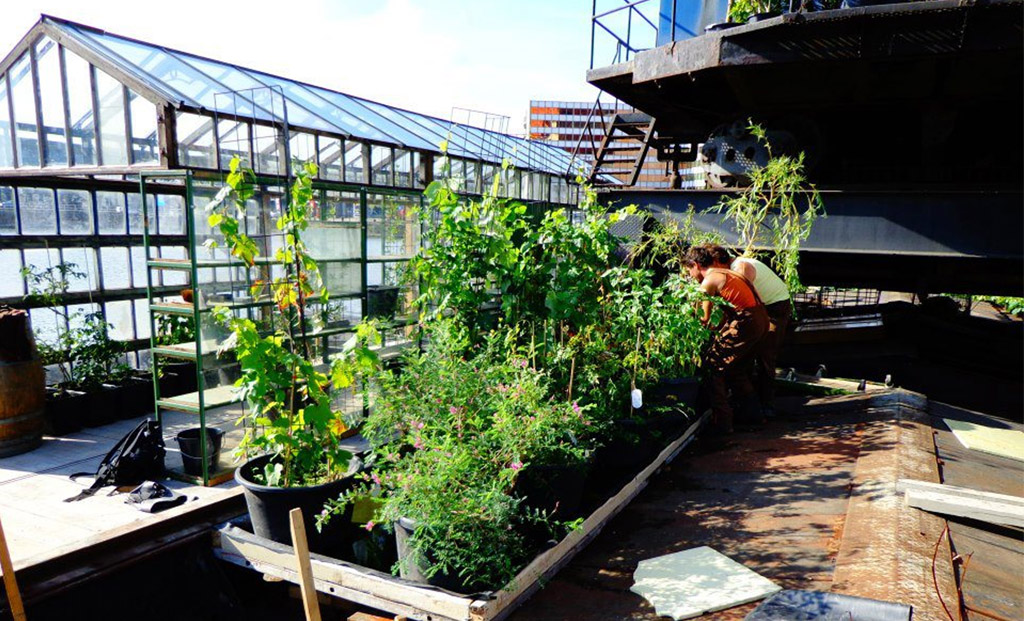
photo credit Sakaramenta


Twitter Delicious Facebook Digg Stumbleupon Favorites More