Visualizzazione post con etichetta Food. Mostra tutti i post

18 mar 2013

Dabba wallas: 4,000 men and 175,000 lunches delivered. A sustainable food delivery system


Today Sustainable diary writes about the successful system of the Dabbawallas, who manage to deliver food from mothers and wives at home into the hands of their sons and husbands who are off at work. “Dabbawalla” comes from the term tiffin dabba, referring to a tiered lunch box and “walla,” a carrier or vendor.
This process, how you can see in the video, is complete sustainable.

"In India, where many traditions are being rapidly overturned as a result of globalization, the practice of eating a home-cooked meal for lunch lives on.
To achieve that in this sprawling urban amalgamation of an estimated 25 million people, where long commutes by train and bus are routine, Mumbai residents rely on an intricately organized, labor-intensive operation that puts some automated high-tech systems to shame. It manages to deliver tens of thousands of meals to workplaces all over the city with near-clockwork precision".
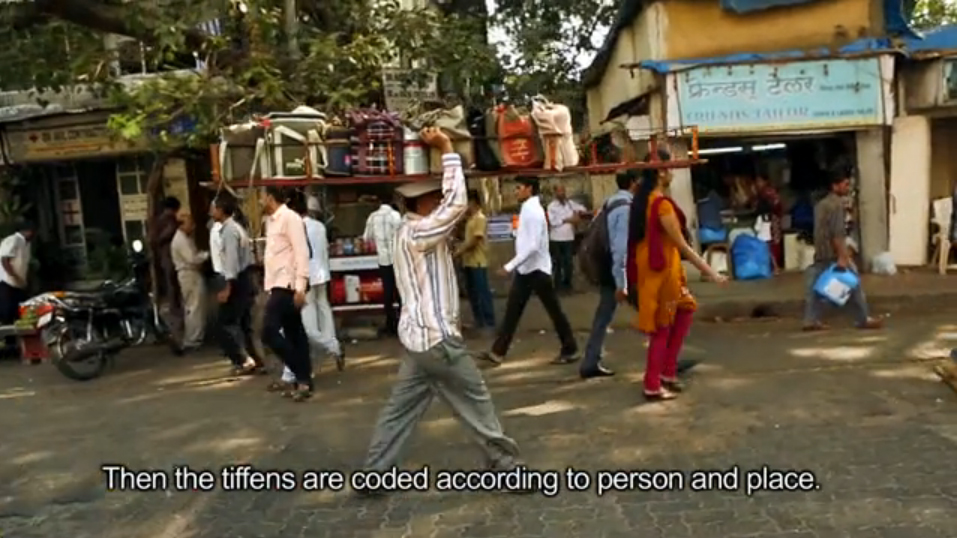

Dabbawallas's video is realized by The Perennial Plate, who explain: "Each day in Mumbai 4000 men in white outfits and matching hats transport 175,000 lunches across the big city. They retrieve the tiffens (lunch containers) of food from mothers and wives, and bring them (by foot, train, bicycle and even carried on top of their heads) to the office buildings of waiting husbands and sons. The Dabba wallas have been doing this since the late 1800s. Despite the unsophisticated mode of transport, the lunches always arrive on time (the error rate is 1 in every 16 million transactions). It's a pretty impressive feat and we were lucky enough to follow a couple Dabba Wallas for a day in Mumbai, and see their work first hand."

Despite the influx of food chains and eateries in Mumbai over the last decade, demand for the lunchtime service is higher than ever before, with customers from multinational corporations and hedge funds. If we thought it was too hard to have a hot, home-cooked meal for lunch each day, well, this organization proves us wrong.

More info


11 mar 2013

Make food not war! Vegetable Weapon by Tsuyoshi Ozawa


Sustainable diary loves speaks about food and food culture, so when we watched the pictures of Tsuyoshi Ozawa on Inhabitat we thought: "This is a good story for start the week".
The artist was born in 1965, Tokyo. In 2001, he began “VegetableWeapon”, a series of photographic portraits of young women holding weapons made from vegetable.
He realized this photo project in different countries around Asia, America, Europe, and Africa. He finds a woman that live in the place and asks her to gather vegetables and other ingredients needed to make an indigenous hot-pot dish. After the food is creatively arranged in the shape of a firearms, he starts shooting the absurd war-like portraits.

Once the photograph is made, Ozawa and his model disassemble the delicious weapon, cook the ingredients, and share a meal together. Vegetable Weapons shows how humor and art enable us to talk about delicate subjects like war, food culture and power.


"Drawing on the dynamics of everyday life and human interactions, Ozawa combines real-life incidents, situations and materials to create works which draw attention to ideas and issues central to social and political life.
[...] He intends these processes to create an opportunity for discussion of issues such as conflict, war and injustice using the construction of an art work as the catalyst for dialogue."

More info

Photo credit © Tsuyoshi Ozawa


5 mar 2013

A local solution for the next generation of global food supply


A common thread between the post of Sunday and the one of today. Another story about food, a topic that Sustainable diary love.
Sourcing food that is grown locally and sustainably is integral to solving the environmental problems we face today. The innovative minds at FreightFarms create access to food in areas of the world where the climate or the urban condition cannot support traditional farming methods.

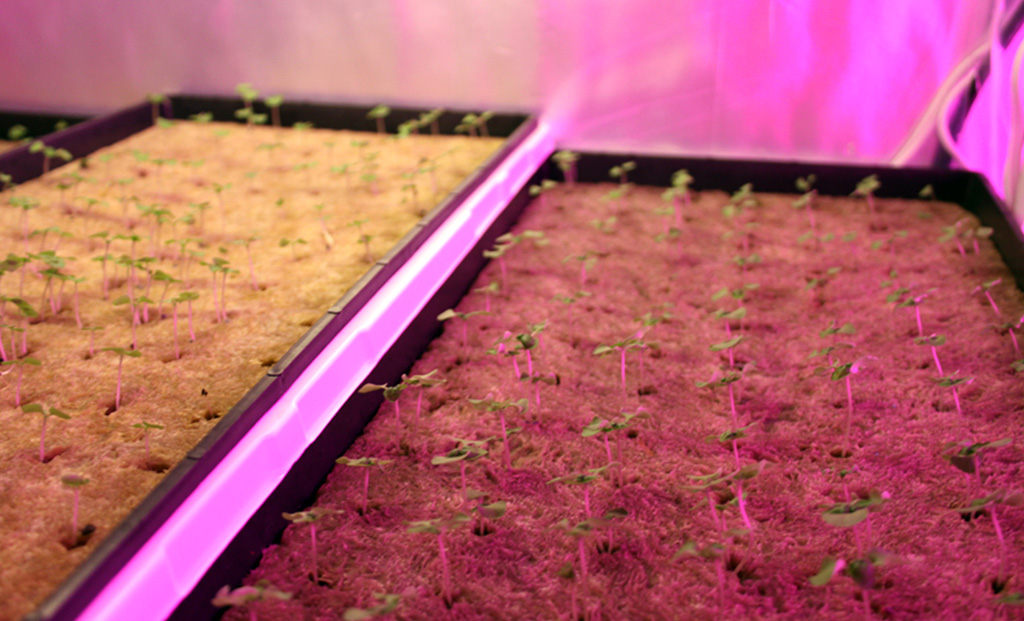
They retrofit used shipping containers into little modular farms that can be strategically placed to supply the needs of communities.
By employing a vertical farming system, they can maximize the the growing space within the container and is possible have year-round growing season. This system brings a high volume of fresh, quality and affordable food within reach of everyone along the food supply chain.
The Freight Farms method uses less water and energy than traditional farming methods and can be done without pesticides or herbicides.

 
Freight Farms offer an immediate foundation to grow a local food economy and sustainable food system.
By enabling high-yield crop production in any climate, Freight Farms offer an immediate foundation to grow a local food economy and sustainable food system.

More info
website Freight Farms

Photo credit © Freight Farms


3 mar 2013

Sunday's Tale: Mandela Foods Cooperative take care of food system of West Oakland, California


Sunday's Tale: a post from the past
Just three days ago on Sustainable diary we wrote of the cool song FoodFight, by Earth Amplified and with today's story we really recognize how people need for being more conscious about our food and food systems.
Until a few years ago West Oakland, a neighborhood situated in the northwestern corner of Oakland - California, had 53 liquor stores and no grocery stores at all. The community had the nearest supermarket, with a full produce section, at one hour's walk away.

In the video we can see James Berk, a local inhabitant, explain that for this lack is diet used to consist of Fritos, Cheetos, and Doritos, and not much more.
But in june 2009 with the opening of Mandela Foods Cooperative the thing started to change. It is a worker owned grocery store (Berk is became one of them!) and nutrition education center that brings healthy, local produce to the neighborhood, and even delivers healthy food to local corner stores. 


Mandela Foods Cooperative is one component of Mandela Marketplace's FoodEnterprise Network that builds a local food system and entrepreneurship opportunity for residents in West Oakland, and establishes a model to catalyze a local food economy within the inner-city.
They purchase from and support small scale farmers, local and cooperative businesses, non-GMO growers, organic producers and fair trade organizations. They carry an array of pesticide free, organic whole foods and grocery items.
So if food kill more people then guns for the moment the situation here is save.

More info

Photo credit © Mandela Foods Cooperative


28 feb 2013

Junk food kill more people than pistols


These are days when you continue to talk in the media of food scandals, horse meat masquerading as beef, donkey's meat in hamburgers, fake biological chicken eggs, etc. .. so when we found ourselves in front of the video Food Fight, by Earth Amplified we launched a large whistle!

The video is a urban gangster movie turned on its head.— instead of street thugs coming in to steal money and groceries, this films shows guys in suits put things on the shelf. It is the story of a young boy who lives in a world where the food at the local corner store is killing his neighborhood, literally. The real damage to the kids and America is from these men at the top; the crimes of Big Ag at a convenience stores is so much worse than what anyone could ever do during a stickup. Obesity and poverty co-existing side-by-side and a food industry that fights hard to keep us in the dark about the correlation between cancer and our diet.
It is a powerful and hard hitting reminder to us all that gun violence is just one symptom of a deeply dysfunctional economic system. And it's an argument that's making its rounds of the internet in a hard-hitting hip hop video that compares the food industry to gangsters and drug dealers.
 

Sugar is as addictive as cocaine. Put that in your pipe and smoke it.

Last but not least: support the movement for thriving communities by getting this into schools and donating to SoS Juice. SOS Juice, is a solar-powered for-profit/non-profit hybrid that will sell juice, smoothies, and compost in order to improve health, promote sustainable agriculture, and create green jobs for low-income youth and the formerly incarcerated individuals.

More info


21 feb 2013

Urban agriculture on ship in Antwerp, by art collective Time Circus


In this day of snow in Milan, is back again to talk about urban garden, this time the project enters (or leaving?) directly from the art world.
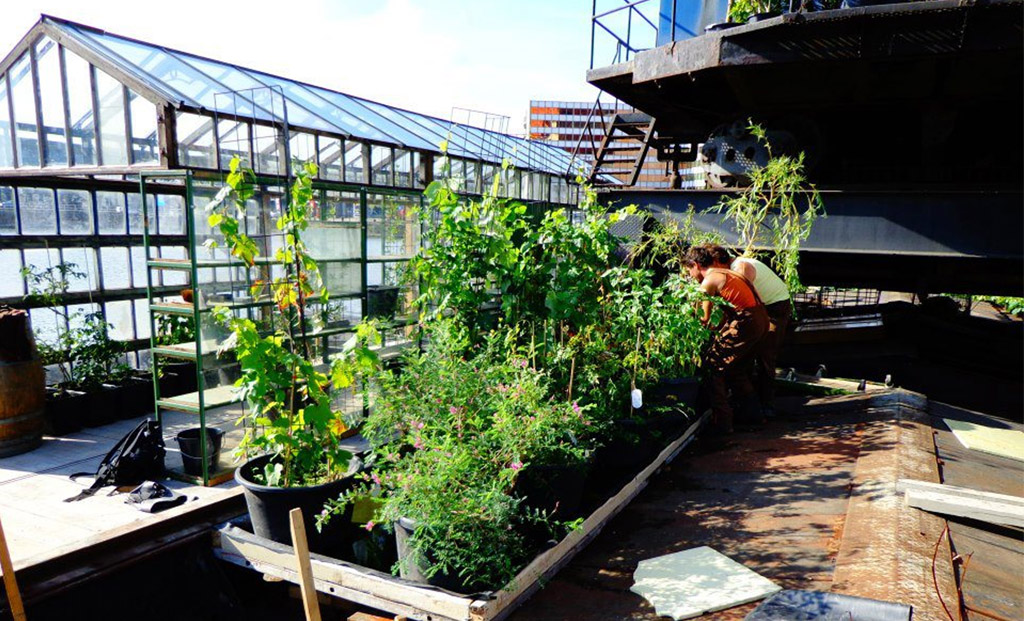
We know that urban gardens can bloom in the weirdest of places, also on an old unused ship crane docked at Bonapartedok, the Belgian port city of Antwerp. Here the Belgian art collective Time Circus, built their great green space, and outfitted with a tree-house made out of recycled materials and a chicken coop. Another cute feature from the floating garden is a glazed greenhouse.


Commissioned by the Antwerp’s MAS Museum, the floating Welvaert Welton garden is designed to engage locals and visitors with sustainable urban farming practices, through community workshops on composting and homemade cider parties. Not only is there a vegetable garden, there's also a kitchen where food can be prepared using ingredients straight from the garden. Urban agriculture is not just about producing one’s own vegetables but more about creating an urban living, working and meeting place.

This experimental garden project is temporary, intended to go on until 2014. It is one cool example of taking back abandoned city spaces, and they can become green and productive.
Time Circus said that is ready to travel to far off places to spread the idea...

More info

Photo credit © Time Circus


19 feb 2013

UFU (Urban Farming Unit) by Damien Chivialle, for re-thinking cities


Yesterday on the diary there was the fabulous story of Todmorden, a town in UK where inhabitants grow in the green public area almost all the vegetables that need. Today we write on another project of re-thinking cities, food production and consumption, UFU (UrbanFarming Unit) a solution for who that don't have a adapted places and conditions.

UFU is a farming experiment inside shipping containers created by French designer Damien Chivialle. Organic fish, fruits and vegetables are produced in the street, avoiding unnecessary travels and providing meaning to food consumption in downtown cities. All prototypes are based on circular agriculture techniques.
Normally, such a container is found in industry, but with UFU it is used to test new applications in a city context. Cycle cultures are central in the research on biological farming without land. Objectives of UFU are to find solutions for growing food under polluted and reduced ground.


Damien Chivialle places a greenery on top of a container in which a aquarium with fish is housed. The fish’s water and excrements feed the greenery plants, who in turn purify the water that flows back to the aquarium. The result: UFU (Urban Farming Unit), a self-regulating city farm the size of a parking spot.
2011’s UFU is one of many container projects in Paris, Lissabon and Zürich, and was recently shown at Brussels’ Kaaitheater. Now, until the end of February, UFU is exhibit in On Leuven’s Grote Markt as part of the Artefact Festival program

The last amazing thing is that this project is developed as Open Source. Download the Sketchup 3D model to make your own greenhouse >>go here

More info

photo credit courtesy Urban Farm Units


18 feb 2013

Incredible Edible in Todmorden: the town that grows all its vegetables


In England, in the county of West Yorkshire there is a small town whose people decided they were worried about climate change, food security in Africa and their children's future . It is Todmorden, a town of 14.000 inhabitants, which in 2008 started what has become the "Incredible Edible" movement.

They started growing vegetables and herbs in flower beds, the aims are to make use of 
underused areas of the community and public spaces to grow food for all to eat. The people wants “to get closer to the food we eat, education and community involvement”.
Their growing around town is organized by their community growers’ group, they are all volunteers. Most of their growing around town is done in raised beds. That means they can use fresh uncontaminated soil and avoid messing surrounding areas. Many of the beds are adopted by groups of people, who do much of the planting and maintenance themselves and may benefit from the produce too. But what is very important is: gifts from the garden to the public is allowed free access.


Last year in Todmorden were counted 70 green areas turned into urban gardens. Along the streets of the town there are plenty of fruit trees, that in the right seasons offer cherries and apricots. They are also bushes with blackberries and strawberries and the point where you can collect legumes, including beans and peas.
The project to make Todmorden the first self-sufficient city of England is expected to reach its peak in 2018.

Today there are nearly 40 independent groups across the UK and more than hundred globally flying the Incredible Edible flag. For this motive they have realize new website, due for for formal launch in April, aims to bring together all the wondrous people who have taken on the "Incredible Edible" framework across the world, as well as to inspire new members.

More info:

photo credit: courtesy of Incredible Edible


11 feb 2013

Baguette table by Studio Rygalik


Two days ago was pubblished a post about the start-up Culinary Misfits, today take again the topic "food waste" with Studio Rygalik of Warszawa, Poland.
They realized a new project, the starting point is a statistical fact: food thrown away in Vienna could feed half of the population of Graz. This was presented for the first time at the Vienna Design Week.
"It was also to show that the materials to build from are all around us. The tables were made from stale baguettes that were supposed to be thrown away".
These bread structures were part of a "bread experience" created by Gosia and Tomek Rygalik, the founders of the Studio, at the Design Week Laboratory, where people were surrounded by bread, eating bread dishes from bread tables.

In their series of "Baguette tables", they cut the french bread to varying lengths, their exposed ends leveled to create the table tops, the longer pieces providing support and stability, functioning as multiple legs, as well as providing some tasty, visual appeal.
Studio Rygalik aims to develop a wide variety of limited edition projects for companies, that maintain a good balance between the commercial and the experimental.


Studio Rygalik develops a wide variety of comprehensive projects. The focus is on furniture, products and spaces. The scope is wide – from design, development and implementation of new products to site-specific installations and production of limited editions, as well as objects, dining experiences and workshops that explore the relations of design, food and eating.

More info:

photo credits © Nick Albert /Kollektiv Fischka


9 feb 2013

Culinary Misfits, a special catering service from Berlin


CulinaryMisfits is a design start-up born in Berlin, exploring the intersection of design and sustainability with a primary focus on food culture and how we can be inspired to rethink how we approach natural foods.
The founders are Lea Emma Rosa Brumsack and Tanja Krakowski. They create the first catering service to make its dishes using only ingredients discarded by supermarkets, farmers and restaurants

The idea is already explained in its name: misfits in fact means both "freak of nature" and "inappropriate", this word was chosen to challenge the widespread belief that the food is good only when it is looking good.
While it is true that the eye wants its part, it is equally true that appearances often deceive. So Lea and Tanja have chosen to use as ingredients only vegetables and fruits of the season because of their aesthetic inaccurate are rejected by large retailers and catering obeying strict criteria and aesthetic dimensions that determine a huge and unnecessary consuming food.
They collect veggies and fruits themselves and co-operate with two local organic farmers who let them have their abandoned harvest to a truly fair price- a substantial extra income for the farmers and a basis of business for Lea and Tanja.


With this second choice products Lea and Tanja create delicious dishes, minimizing waste and looking at the ingredients locally, thereby complying with the criteria of distribution at zero kilometers, without depriving their creations of quality and good taste.
After starting in early 2012, Culinary Misfits has at the moment a provvisory home in Kreuzberg. Now a crowdfunding campaign is underway to allow Culinary Misfits to have their own place for cooking, experimenting, lecturing and selling the little misfits.

More info:
www.culinarymisfits.de
Facebook page

photo credits Culinary Misfits


Twitter Delicious Facebook Digg Stumbleupon Favorites More